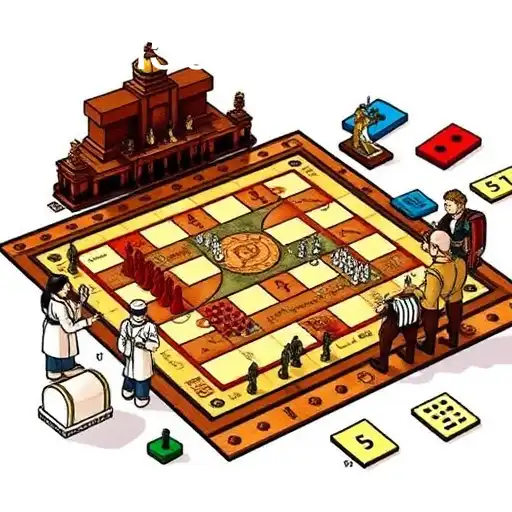
Tabletop Games: A Journey Through Strategy and Imagination
Tabletop games have been a cornerstone of group entertainment for centuries. From ancient board games played in royal courts to modern-day complex strategy games, they have captivated people of all ages and backgrounds. As we dive into the world of tabletop games, it becomes clear how these games have evolved and adapted, reflecting societal changes and technological advancements.
The Origins and Evolution
The roots of tabletop games can be traced back thousands of years. Early games like the Egyptian Senet or the Royal Game of Ur from Mesopotamia show that the concept of recreational play has long been intertwined with human culture. These games were not only a source of entertainment but also a reflection of cultural and strategic thinking.
As centuries passed, the variety of tabletop games expanded. Chess, which emerged around the 6th century AD, became a worldwide phenomenon due to its deep strategy and intellectual challenge. Checkers, Go, and Backgammon are other classic games that have tested the strategic minds of players across different eras.5d.game
The 20th century saw an explosion in tabletop game development. With the creation of games like Monopoly and Scrabble, family-oriented fun became a staple of households globally. These games emphasized luck, negotiation, and wordplay, introducing new genres and mechanics that would further develop in the coming years.9nz.com
The Modern Tabletop Renaissance
The latter part of the 20th century into the 21st century marked a renaissance for tabletop gaming. Driven by a renewed interest in face-to-face social interaction, games like Settlers of Catan and Carcassonne emerged, redefining the modern board game experience. These games introduced new mechanics such as resource management and tile placement, encouraging strategic thinking and cooperative play.55ll.com
Another pivotal development within this era was the rise of role-playing games (RPGs) like Dungeons & Dragons (D&D). First published in the 1970s, D&D captivated audiences with its open-ended gameplay and narrative depth. Players could now embark on intricate quests, formulating their own stories and character arcs, fostering a deep sense of immersion.43y.com
The Mechanics Behind Tabletop Games
Tabletop games engage players through various mechanics that define the flow and strategy of a game. Among the most common mechanics are:96a.com
- Worker Placement: This mechanism involves placing tokens (workers) on the board to perform actions, gather resources, or advance goals. Games like Catan and Agricola utilize this mechanic to create strategic depth.
- Deck Building: Popularized by games such as Dominion, this method involves constructing a deck of cards during play, allowing players to customize strategy and adapt to game conditions.
- Cooperative Play: Rather than competing against each other, players work together to achieve a common goal. Pandemic is a notable example where players band together to save the world from diseases.
- Legacy Mechanics: A recent innovation in the tabletop world, where games evolve over multiple sessions. Changes are permanent, resulting in an ever-changing game state. Risk Legacy and Gloomhaven have expertly implemented this mechanic.
The Impact of 59a.com and Online Portals on Tabletop Gaming
With the advent of the internet, the potential for tabletop games expanded online. Websites such as 59a.com have emerged, offering a platform for tabletop enthusiasts to discover, purchase, and even play games virtually. These online portals have democratized access to diverse games and have spawned communities united by shared interests.
Through sites like [59a.com](https://www.59a.com), players around the world can engage with each other, sharing strategies and stories while also having access to countless resources and rulebooks. The transformation from physical to digital has not only preserved the essence of tabletop play but also enhanced it by making it more accessible across demographics.
Cultural Significance and Future Trends
Tabletop games are not just fun; they represent cultural dialogues, learning experiences, and social bridges. As new games are developed, they often reflect current societal themes, addressing everything from political allegories to environmental issues. Designers are increasingly being recognized as artists, creating games that are not only challenging but also educational and thought-provoking.
As technology continues to evolve, so does the potential for tabletop games. Augmented reality (AR) and virtual reality (VR) are poised to revolutionize the tactile experience, merging the tangible with the digital. This blend promises to offer unprecedented levels of interaction and immersion.
Furthermore, the wave of indie game developers has broadened the horizon for unique and diverse game concepts. Crowdfunding platforms have allowed for the nurturing of ideas that might not otherwise make it to mainstream production.
Conclusion
As we look to the future, it is clear that tabletop games will continue to thrive and evolve, adapting to new technologies and the shifting desires of players worldwide. From ancient strategies to modern innovation, tabletop games will remain a beloved pursuit that unites generations in strategic play and imaginative exploration.